VRV and VRF Systems: A Guide to Commercial Heating and Cooling
- November 5, 2026
- Posted by: admin
- Category: Ventilation
Keeping a commercial building comfortable is not always straightforward. A busy meeting room may need cooling while a quieter office needs heating. Working hours, changing occupancy and the layout of your premises all affect what you need from an air conditioning system.
At SDH Building Services, we help businesses choose heating and cooling solutions that suit their premises and day-to-day operations. We cover design, installation, commissioning, and ongoing maintenance, so you have one team to support your system throughout its life.
If you are researching commercial air conditioning, you have probably come across the terms VRV and VRF. Here is what they mean, how the systems work and what to consider before choosing one.
What Are VRV and VRF Systems?
VRV stands for Variable Refrigerant Volume, while VRF stands for Variable Refrigerant Flow.
The main difference is the name. VRV is a registered trademark belonging to Daikin, while VRF is the generic industry term for the same underlying technology. When comparing systems, the equipment’s features and suitability for your building matter more than the terminology.
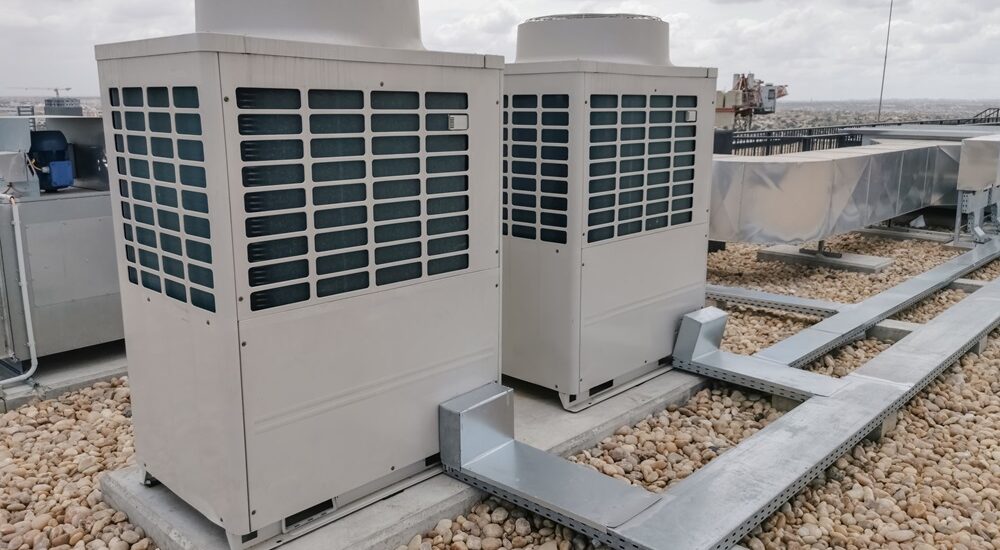
A typical installation connects one or more outdoor units to multiple indoor units through refrigerant pipework. The system adjusts refrigerant flow and its output according to the heating or cooling demand from the connected spaces.
Individual areas can have their own temperature settings, although the ability to heat and cool different rooms simultaneously depends on the configuration selected.
How Do These Systems Work?
VRV and VRF systems use inverter-driven compressors that vary their speed as demand changes.
Each indoor unit monitors the temperature in its area against the selected setting. The system responds to the combined requirements of the connected units, increasing output when more heating or cooling is needed and reducing it when demand falls.
This helps match the system’s output to what the building needs, rather than relying on a fixed-speed compressor repeatedly switching on and off.
When planning an upgrade, consider which rooms are occupied throughout the day, which are used occasionally and whether different areas regularly need heating and cooling at the same time. These details help determine the most suitable system.
What Is the Difference Between Heat Pump and Heat Recovery Systems?
Not every VRV or VRF system offers the same functionality. One of the main choices is between heat pump and heat recovery configurations.
Heat pump systems
A typical heat pump VRV or VRF system operates in either heating or cooling mode across the connected refrigerant circuit. Rooms can still have individual temperature settings, but they cannot heat and cool simultaneously on that circuit. This can suit buildings where most areas have similar requirements at a given time.
Heat recovery systems
Heat recovery systems allow some areas to heat while others cool.
They can transfer heat from rooms requiring cooling to rooms needing warmth, rather than rejecting all that heat outdoors. This can be useful in buildings with varied temperature demands. For example, a busy meeting room may need cooling while a shaded office needs heating. A heat recovery system can accommodate both requirements.
The right choice depends on how your building is used, not simply on which system offers more features.
What Are the Main Benefits?
Control over individual areas
VRV and VRF systems allow separate rooms or zones to have their own temperature settings. Depending on the equipment selected, local controls can work alongside centralised controls or a building management system.
This gives businesses flexibility over how temperatures and operating schedules are managed. Some spaces may need occupant control, while others are better managed centrally.
Output that responds to demand
Variable-speed technology helps the system adjust its output as heating and cooling requirements change. Heat recovery configurations can also move heat between areas with different demands.
These features can support efficient operation, but they do not guarantee a particular saving. Running costs depend on the system design, building conditions, settings, usage, and maintenance.
A choice of indoor units
VRV and VRF systems offer several indoor-unit options, including:
- Ceiling cassette units.
- Ducted units.
- Wall-mounted units.
- Floor-standing units.
- Ceiling-suspended units.
The available combinations depend on the manufacturer and system selected. The choice should take account of ceiling space, room layout, appearance, airflow, and access for servicing.
Does VRV or VRF Air Conditioning Provide Fresh Air?
Heating and cooling are not the same as ventilation.
Air conditioning primarily manages temperature. A standard VRV or VRF installation should not be assumed to provide the fresh outdoor air a building needs.
Ventilation must be considered separately as part of the wider building services design. Dedicated equipment, such as heat recovery ventilation units or air handling systems, can work alongside air conditioning.
At SDH, we provide ventilation as well as air conditioning services, allowing us to consider both requirements when assessing your premises.
What Should You Consider Before Installation?
A suitable system starts with an assessment of your building and how it is used.
At SDH, we carry out a site survey to understand your requirements and recommend an appropriate installation. We consider the layout, number of zones, occupancy, heating and cooling loads, available space, electrical requirements, and controls.
Before the survey, it helps to think about:
- Which areas need heating, cooling, or both.
- When each space is occupied.
- Whether rooms have noticeably different temperature requirements.
- Where indoor and outdoor equipment could be positioned.
- Whether changes to the layout or occupancy are planned.
- What access restrictions could affect installation.
- Who will operate the controls and arrange maintenance.
Let us know about any activities that cannot be interrupted during the work. Understanding these restrictions early helps us plan installation around your business.
How Much Do VRV and VRF Systems Cost?
There is no single installation price that suits every building. Costs depend on the capacity required, number and type of indoor units, pipework routes, controls, and complexity of the installation.
A site survey provides a firmer basis for budgeting than a generic estimate. SDH also offers a commercial air conditioning cost calculator as a starting point for indicative installation costs.
When comparing quotations, check whether they include:
- Equipment and controls.
- Refrigerant pipework and electrical work.
- Ventilation, where required.
- Testing, commissioning, and handover.
- Access equipment and making good.
- Warranty terms and maintenance arrangements.
Look at the complete installation rather than the equipment price alone. Ask about exclusions and any assumptions that could affect the final cost.
Why Is Maintenance Important?
VRV and VRF systems need regular servicing to maintain performance and identify developing faults.
Maintenance can include cleaning filters, checking coils and fans, inspecting condensate drainage, testing pumps where fitted, checking electrical connections and confirming that controls operate correctly. The appropriate schedule depends on the equipment, site conditions, and level of use.
Depending on the refrigerant, charge and equipment, statutory leak checks may also be required. Work on refrigerant circuits must be carried out by appropriately qualified personnel, with company certification where required.
If rooms stop reaching their set temperatures, airflow drops, units leak or fault codes appear, arrange an inspection rather than waiting for the problem to worsen.
SDH provides maintenance packages for both systems installed by our engineers and existing commercial air conditioning equipment, with UK-wide coverage. From Lancashire to Leicestershire, our experienced engineers help businesses keep their systems running reliably and efficiently.
How We Can Help
At SDH Building Services, we provide commercial air conditioning design, installation, commissioning, maintenance, and repairs. With more than 20 years of experience, we support businesses across the UK from our Bolton headquarters and Leeds office.
Whether you are replacing ageing equipment, refurbishing an office, or fitting out a new commercial property, we start by understanding your building and what you need from it.
You do not need a preferred manufacturer or a finished specification. Tell us about your premises, the problems you want to solve and your budget, and we can discuss suitable options.
To learn more about our VRV and VRF air conditioning services, call 01204 305 053 or email the team to arrange a free site survey and no-obligation quotation.